Born on the 28th of July 1887, in Blainville-Crevon, France. Marcel Duchamp became the newest member of a family of creative intellects, with three of Duchamp’s five siblings also becoming successful artists. With his two older brothers having already left home, Duchamp and his sister Suzanne (also an artist, but less accomplished due sexism in the art world) became close, and aided in each others artistic ventures. Suzanne became the subject of many of Duchamp’s earliest works.

studying at the Lycée Pierre-Corneille secondary school, Duchamp wasn’t exactly an exemplary student, but did manage to excel in mathematics and art. Winning prizes for both, with a coveted first place prize in art, around the time he made conscious decision to become an artist. With this validation Marcel Duchamp moved on to study art at the Academie Julian, but allegedly preferred spending his time playing pool than attending class.
He used to make money creating comics , playing with words and symbols, an element of his work that stayed throughout his career. His more serious early works however reflected a more post-impressionist style, exploring more mainstream techniques. These early works were inspired by Fauvism and artists such as matisse. Five years on, His style progressed further into the realms of cubism, and even futurism. His mechanical depictions of the human figure, using an earthy colour palette being a perfect demonstration of this style.
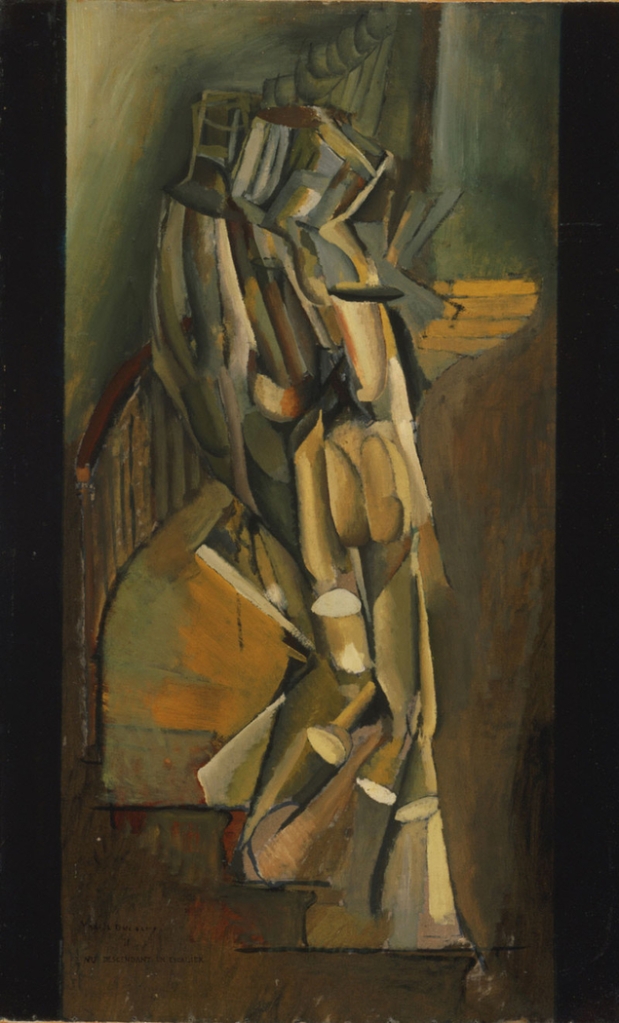
nude descending a staircase no.1, 1911 
nude descending a staircase no.2, 1913
From 1912 onwards Marcel Duchamp refrained from painting too many more paintings, and began using found objects to create sculptures. His revolutionary exploration of conceptualism, inspired the movement to this day, as well fuelling the questioning of the definition of art. Most famous of Duchamp’s ‘readymades’ is the urinal piece titled ‘Fountain’ and signed R.Mutt. A quintessential piece of work , encompassing a more modern outlook on art during the 20th century.
 Daniel Scotland CAP